

Hamilton Village adds new housing choices near downtown Dalton
Nov. 19, 2026
Source: Dalton Daily Citizen
By Jessica waters - jessica.waters@daltoncitizen.com
Forty detached homes, priced at $290,000 or less, are planned in a development combining public infrastructure investment with private home construction
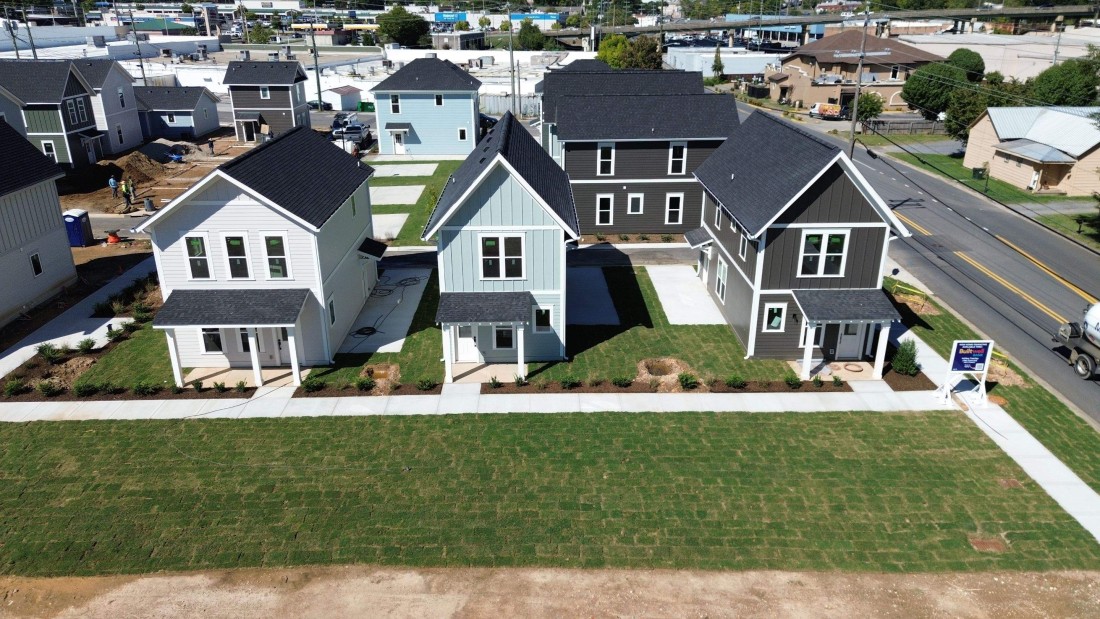
A new neighborhood taking shape along South Hamilton Street is intended to address a gap in Dalton’s housing market — one that local economic development officials say has made it difficult for some workers and other residents to find homes that fit their needs and budgets. Hamilton Village will eventually contain 40 detached, owner-occupied homes with one to three bedrooms, priced between $125,000 and $290,000. But despite its designation as a workforce housing development, buyers do not have to work for a particular employer, earn within a specified income range or meet special eligibility requirements. Carl Campbell, executive director of the Dalton-Whitfield Joint Development Authority (JDA), said the idea for Hamilton Village grew out of discussions with area employers, including local manufacturers who had approached the JDA with concerns about employees struggling to find suitable housing. Those conversations helped shape the project now being developed through a partnership involving the JDA, the City of Dalton, the state of Georgia, private developers and other community organizations. Public funding helped pay for streets, utilities and other infrastructure, while private developers are responsible for constructing and selling the homes. According to Ali Harp, who has been involved with the project through the JDA, 17 homes are completed or nearing completion. The first home sold was a one-bedroom unit.
SMALLER HOMES, DIFFERENT CHOICES
Hamilton Village looks different from many traditional subdivisions. Although the houses are detached rather than sharing walls like townhomes, they sit close together on relatively small lots. Some have two stories, while others are single-level homes. The development includes one-bedroom houses of approximately 745 square feet, along with larger two- and three-bedroom designs. Each home has parking for two vehicles, with additional parking available within the development. The compact layout leaves little private yard space. Residents will pay a homeowners association fee of $75 per month, primarily for lawn care and stormwater maintenance. Campbell said the development was designed to provide housing choices that are not always readily available in the local market. The concept behind the community is what Campbell described as “quality density” — an approach to residential development that he said can also be seen locally in neighborhoods such as Patterson Farms and is gaining attention throughout Georgia. The approach seeks to make starter homes more attainable without sacrificing construction quality by reducing the size of individual homes and private yards while placing greater emphasis on shared greenways, trails, community parks and other common amenities. The development also reflects changing household needs identified in the Greater Dalton Housing Needs Analysis, completed in December 2023. That study, prepared by KB Advisory Group, identified a need for more housing choices at different price points, including options for smaller households. It also examined housing affordability, neighborhood revitalization and opportunities for residential development closer to downtown. Campbell said that developments such as Hamilton Village may appeal to people at different stages of life, including single adults, young professionals, smaller households and older residents who no longer want to maintain a larger home and yard.
THE LAND
The land itself also has a history connected to one of Dalton’s major employers. Campbell said Mohawk Industries originally donated the property to the city with a deed restriction requiring it to remain green space for 20 years. When the possibility of building housing on the property emerged, Mohawk agreed to an exception to the restriction, allowing the project to proceed, he said. Campbell estimated the value of the land contributed by the city at $156,111, although that figure remains subject to confirmation. The land was transferred to the private developer in April 2026, before construction began. Harp said the original plan had been to transfer individual lots as homes were sold, but attorneys and the developer determined that transferring the land earlier was necessary for financing. The transfer also placed the land on the property tax rolls before individual homes were sold, she said. The JDA retained a contractual protection through a reverter provision that allows it to recover property if the developer fails to meet the lot-sale requirements. The city has accepted the development’s streets and public rights-of-way. Camption separately provided $95,000 to support neighborhood design. bell said the developer will cover the first year of street maintenance, with the city assuming responsibility afterward. The JDA conveyed the neighborhood’s common areas to the homeowners association, which will be responsible for shared maintenance funded in part through residents’ monthly fees.
THE FUNDING
The development’s financing is one of the features that distinguishes Hamilton Village from a conventional private subdivision. The Georgia Department of Community Affairs awarded $1.5 million through its Rural Workforce Housing Initiative to help pay for infrastructure. The City of Dalton committed approximately $622,000 in matching funds. Together, those commitments provided approximately $2.1 million for infrastructure work. The Lyndhurst FoundaThe infrastructure budget ultimately grew to approximately $2.3 million. Campbell said unexpected costs included removing rock and old building foundations, along with wet soil conditions associated with a leaking underground water pipe. The JDA is covering the approximately $200,000 difference between the original budget and the final infrastructure cost, he said. The infrastructure work includes streets, stormwater facilities, water and sewer service. That investment is intended to reduce costs that otherwise would have to be incorporated into the prices of the homes. For perspective, $2.3 million divided among 40 planned homes amounts to approximately $57,500 in infrastructure spending per home. That is an allocation of development costs, however, not a verified reduction of $57,500 in the price of each house. The JDA competitively bid the infrastructure work. The homebuilding portion was awarded through a separate proposal process to Herndon Properties and Proper Construction. Under the state grant requirements, all 40 homes must initially sell within the 125,000-to-290,000 price range, Campbell said. Those restrictions do not establish permanent resale price limits. Campbell said the state does not track subsequent sales of the homes.
THE VILLAGE
Hamilton Village also required a different approach to zoning. Campbell said the project helped introduce an Urban Planned Unit Development zoning framework intended to accommodate smaller homes on compact lots while maintaining construction and design standards. The arrangement allows homes to be built closer together than would typically be permitted in conventional subdivisions. Campbell describes the concept as “quality density” — providing more housing on a limited amount of land without relying exclusively on apartment buildings or attached townhomes. The homes are not intended to appeal to every buyer. Harp made a similar point about the development’s relatively small scale. With 40 homes planned, she said, the project does not need to appeal to everyone in the community. It needs to attract 40 buyers interested in the type of housing being offered. Instead, the development is designed to add a type of housing that officials believe has been missing from the local market. Its location near downtown is another part of the strategy. Campbell said additional residents could support nearby businesses and contribute to continued neighborhood revitalization. Those broader economic benefits remain expectations rather than measured outcomes of the development. For the city and JDA, the potential returns also include property taxes from privately owned homes and utility revenue from new customers.
E-EDITION https://digital.daltoncitizen.com/Dalton-Daily-Citizen-11142026-e-Edition/1/